How to clean a Keurig (the parts descaling misses)
Descaling treats the plumbing. The needles, pod holder, reservoir and drip tray are a separate job, and Keurig's guides are specific about how each one is done.
Oohunt Deal Desk · Buying guides · October 23, 2026 · 7 min read
As an Amazon Associate we earn from qualifying purchases made through links on this page.
Unplug it, hand wash the reservoir and drip tray, and clear both needles with a straightened paper clip. That is cleaning a Keurig, and it is a different job from descaling: descaling dissolves mineral scale inside the water lines, and washing never reaches that. Keurig’s own maintenance table keeps them on separate schedules, and so does this page.
Everything below is from Keurig’s Use and Care guides, which are more specific about cloths and paper clips than you might expect.
Before you start
Turn the brewer off and unplug it. Take the water filter out of the reservoir if you use one, because it should not be in there while you wash the tank. And never immerse the brewer itself in water or any other liquid: the washable parts come off, the machine does not go in the sink.
The reservoir and its lid
Lift the reservoir out and wash it with a damp, soapy, non-abrasive cloth, then rinse it thoroughly. Keurig’s reason for the thorough rinse is worth repeating: leftover cleaning solution can contaminate the water supply, which is the water your coffee is made of.
Two instructions people get wrong here. The reservoir and lid do not go in the dishwasher. And do not dry the inside with a cloth, because lint stays behind; fill it with clean water instead and put it back, or let it air dry.
The drip tray
It holds up to 8 ounces of overflow, which is most of a mug, and it is usually the part someone discovers by tipping it down their counter. Slide it toward you keeping it level, empty it, and wipe it with a damp, soapy, lint-free cloth.
The pod holder and the exit needle
Lift the handle, grasp the top of the pod holder and push up from underneath to release it, then detach the funnel. Wash both. The exit needle is inside the bottom of the pod holder, and Keurig’s instruction is literal: insert a straightened paper clip into the exit needle to loosen coffee grounds.
A clogged exit needle is also the first thing Keurig lists when a brewer delivers a partial cup, so this is as much a fix as a chore.
The entrance needle
This is the one most people never touch. Lift the brewer handle and look at the underside of the lid: the entrance needle is what punctures the top of the pod. Holding the handle up, carefully put a straightened paper clip into all of the holes and move it gently to loosen grounds.
Then lower the handle completely and run two water-only brew cycles with no pod, which flushes out whatever you dislodged. Keurig also has video instructions for both needles on its support site.
What to clean, and how often
| Part | How often | How |
|---|---|---|
| Water reservoir and lid | Weekly | Damp soapy non-abrasive cloth, rinse well, air dry |
| Drip tray | When it fills, holds 8 oz | Slide out level, damp soapy lint-free cloth |
| K-Cup pod holder and funnel | Weekly, or when grounds show | Lift out, wash, clear the exit needle |
| Exit and entrance needles | When grounds appear in the cup | Straightened paper clip, then two water-only brews |
| Outside of the brewer | As needed | Damp cloth; never immerse it in water |
Alongside those, Keurig’s table adds a rinse pod weekly, a water filter cartridge every 2 months and descaling solution every 3 months. The rinse pods are specifically for flavor carryover, and Keurig suggests one after hot cocoa or other sweetened pods, which are the ones that leave the needles sticky.
After the machine has sat unused
Empty the reservoir before storing or moving a brewer, keep it upright so the inner tank does not leak, and keep it somewhere frost-free, because water freezing inside can damage it. Coming back to one, Keurig recommends rinsing the reservoir with fresh water and running rinsing brews with no pod, and the K-Mini guide says to descale it as well before you drink anything out of it.
What cleaning will not fix
Slow brewing, less coffee than you asked for and a cooler cup are scale symptoms, not residue symptoms. If you have washed everything and cleared both needles and the brewer is still underperforming, the answer is in how to descale a Keurig, and if it will not brew at all, start with why a Keurig stops brewing.
What the weekly pass needs
Prices change often, so check the current one on Amazon.
What we would buy (4)
Affiliate links
- Check price on Amazon
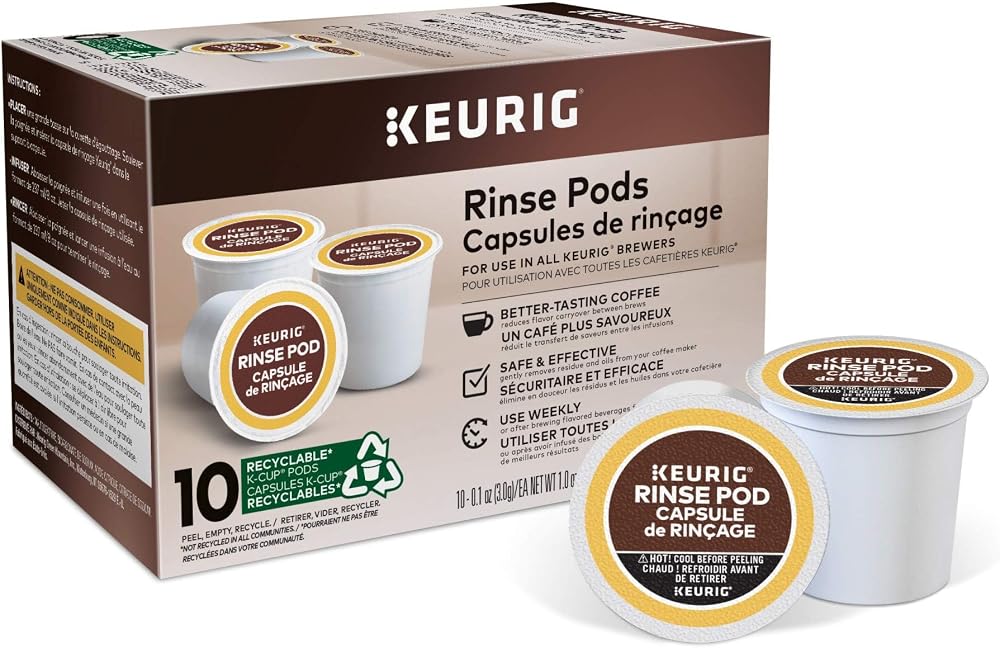 Keurig
Rinse Pods
Opens Amazon in a new tab.The weekly line on Keurig's own maintenance table, for flavor carryover between brews.
- Check price on Amazon
 Keurig
3-Month Brewer Care Maintenance Kit
Opens Amazon in a new tab.Rinse pods, filters and descaling solution together: all three intervals in one box.
- Check price on Amazon
 Keurig
Water Filter Refill Cartridges
Opens Amazon in a new tab.Comes out before you wash the reservoir, and is due every 2 months anyway.
- Check price on Amazon
 Keurig
Descaling Solution, 28 oz
Opens Amazon in a new tab.For the job this page is not about: the scale inside the water lines, every 3 months.
No prices or star ratings here. Prices change daily and we do not track them, so Amazon shows you the current one. Nothing on this list has been tested.
Common questions
How do you clean a Keurig?
Unplug it, wash the reservoir and lid by hand with a damp soapy cloth, empty and wipe the drip tray, take out the pod holder and clear the exit needle with a straightened paper clip, clear the entrance needle under the lid the same way, then run two water-only brews. Descaling is a separate job.
Can you put a Keurig water reservoir in the dishwasher?
No. Keurig's guides say the reservoir and its lid should not go in the dishwasher. Hand wash with a damp, soapy, non-abrasive cloth and rinse thoroughly, and do not dry the inside with a cloth, because lint stays behind.
Why are there grounds in my coffee?
Grounds collect in the exit or entrance needles. Keurig's fix is a straightened paper clip in both: the exit needle inside the bottom of the pod holder, and the entrance needle on the underside of the lid. Then run two brews with no pod.
How often should you clean a Keurig?
Keurig's maintenance table puts rinse pods weekly, filters every 2 months and descaling every 3. The washable parts, meaning the reservoir, lid, pod holder and drip tray, are worth doing on the weekly pass, and the needles whenever grounds show up.
What is the difference between cleaning and descaling a Keurig?
Cleaning deals with what you can reach: grounds, residue, the tank and the tray. Descaling dissolves mineral scale inside the water lines and on the heating element, which no amount of washing touches.
Can you use soap or bleach in a Keurig?
Mild soap on the washable parts only, rinsed thoroughly, because Keurig warns that leftover cleaning solution can contaminate the water supply. Never immerse the brewer itself, and nothing abrasive. Keurig's guides name no bleach step at any point.
The filter that comes out first is covered in the Keurig water filter guide, and the quarterly job in how often to descale a Keurig. More for the kitchen sits in home & kitchen.